
How Many Laser Hair Removal Sessions Do You Really Need?

Laser hair removal has become one of the most popular beauty treatments in the world. People love it for the promise of smooth skin, less daily maintenance, and long-lasting results. Yet one question appears again and again before the first appointment: how many laser hair removal sessions do you really need?
The answer is not always simple. Hair growth patterns, skin tone, hormones, treatment areas, and even genetics can influence the final number of sessions. Understanding these factors can help set realistic expectations and ensure the best possible outcome.
If you enjoy learning about modern beauty treatments and skin care trends, you can also explore helpful beauty articles, where readers can find inspiration and practical advice for maintaining healthy, beautiful skin.
Why Multiple Laser Hair Removal Sessions Are Necessary
Many people imagine that one laser treatment will permanently remove every unwanted hair. Unfortunately, the biology of hair growth does not work that way.
Hair grows in cycles. At any given moment, some hairs are actively growing while others are resting beneath the skin. Laser technology is most effective when targeting hairs during the active growth phase, known as the anagen stage.
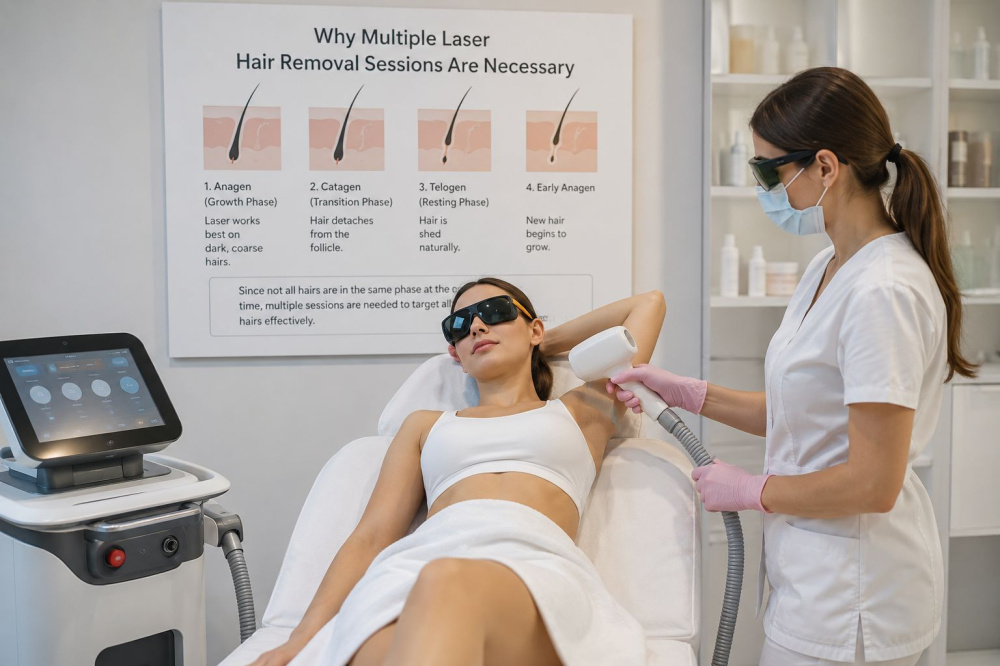
Because only a portion of hairs are actively growing at the time of treatment, several sessions are required to target new groups of follicles as they enter the growth cycle.
Laser hair removal is a process, not a single event. Consistency is what creates long-term results.
This is why clinics typically schedule appointments several weeks apart. Each session builds on the progress of the previous one, gradually reducing hair density and slowing future growth.
The Average Number of Sessions Most People Need
While every person is different, most clients require between six and eight laser hair removal sessions for optimal results.
The exact number depends on several factors.
- Hair color and thickness;
- Skin tone;
- Hormonal balance;
- Treatment area;
- Type of laser technology used;
- Individual genetics;
Some people notice dramatic improvement after only three or four treatments. Others may need ten or more sessions to achieve their desired outcome.
A common mistake is stopping treatment too early after seeing initial improvement. Hair reduction continues to develop over time, and completing the recommended series usually produces the most impressive transformation.
How Hair Color Affects Treatment Success
Laser devices target melanin, the pigment found inside hair follicles. Darker hair contains more melanin, making it easier for the laser to identify and destroy the follicle.
People with dark, coarse hair often see faster results because the laser energy is absorbed more effectively.
Lighter hair colors can be more challenging.
- Blonde hair contains less pigment;
- Red hair responds differently to laser energy;
- Gray hair often has minimal melanin;
- White hair may not respond well to treatment;
The contrast between skin and hair color plays a major role in treatment efficiency. Advances in laser technology have improved outcomes for many skin types, but darker hair remains the ideal candidate.
Different Body Areas Require Different Session Counts
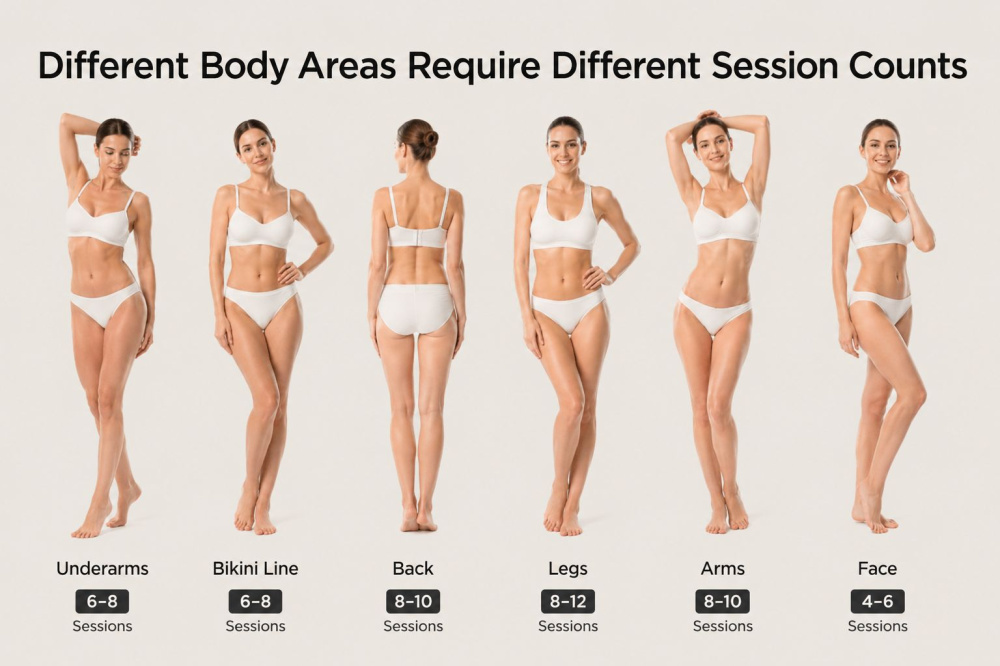
Not all areas of the body respond at the same speed. Some regions contain stronger follicles and more active hair growth patterns.
Facial Hair
Facial hair often requires more treatments because hormonal influences can stimulate continued growth.
Areas such as the upper lip, chin, and jawline may need eight to twelve sessions.
Underarms
Underarm hair is typically dark and coarse, making it one of the easiest areas to treat.
Most people achieve excellent results after six to eight sessions.
Bikini Area
The bikini region usually responds very well to laser treatment because the hair tends to be thick and highly pigmented.
Many clients see substantial reduction after six sessions.
Legs
Leg hair often requires six to ten treatments depending on thickness and density.
The large treatment area can make progress appear gradual, but results become increasingly noticeable with each visit.
Thick, dark hair generally responds faster than fine, light hair regardless of the treatment area.
How Hormones Influence Results
Hormones can significantly affect laser hair removal outcomes.
Conditions such as polycystic ovary syndrome, pregnancy-related hormonal changes, or endocrine disorders may stimulate additional hair growth even after successful treatment.
This does not mean laser hair removal is ineffective. Instead, it may mean that maintenance treatments are necessary over time.
People with strong hormonal influences often benefit from a customized treatment schedule developed by an experienced practitioner.
In some cases, addressing the underlying hormonal issue can improve laser treatment effectiveness and help maintain smoother skin for longer periods.
Typical Laser Hair Removal Timeline

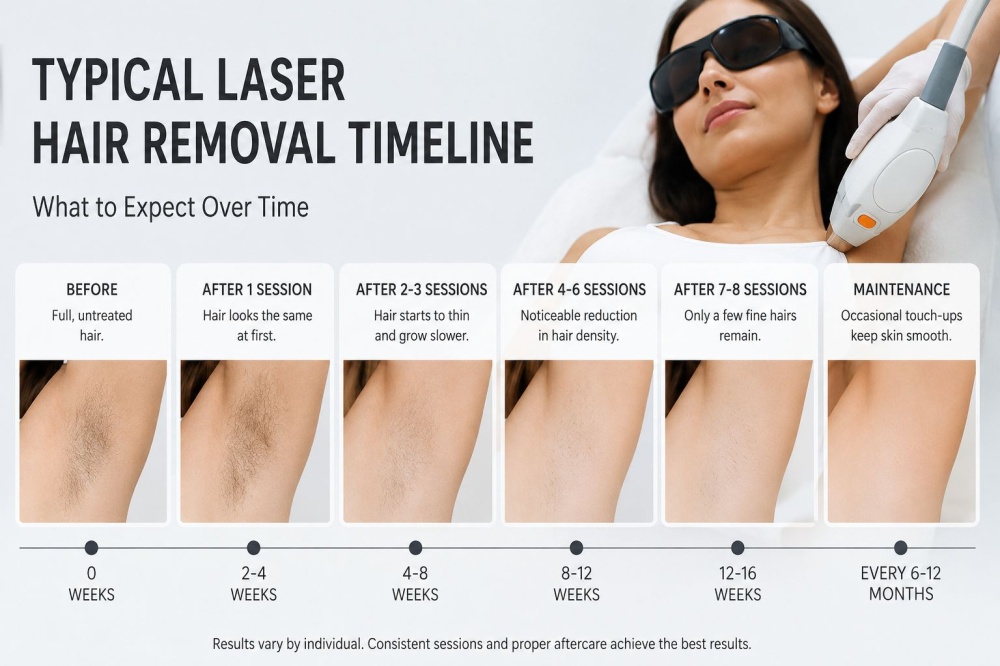
Understanding the treatment timeline helps clients stay patient and motivated throughout the process.
| Session | What to Expect |
|---|---|
| 1 | Initial reduction begins |
| 2-3 | Slower regrowth becomes noticeable |
| 4-5 | Significant thinning appears |
| 6-8 | Major long-term reduction achieved |
| 9+ | Additional refinement if needed |
Results are cumulative. Hair does not disappear overnight. Instead, each treatment gradually weakens the follicles until many stop producing hair altogether.
Sometimes clients become discouraged during the middle of treatment because progress seems slower. This is perfectly normal and often part of the process.
What Happens If You Miss Sessions
Timing matters.
Laser treatments are carefully scheduled to match the natural hair growth cycle. Missing appointments can delay progress because fewer follicles will be targeted at the optimal stage.
To achieve the best outcome, follow the treatment schedule recommended by your provider.
- Attend appointments consistently;
- Avoid excessive sun exposure;
- Shave before treatment when instructed;
- Follow all aftercare recommendations;
Regular attendance allows the laser to target new growth efficiently and maintain treatment momentum.
Will You Ever Need Maintenance Sessions
Laser hair removal offers long-lasting hair reduction, but it is important to understand that no treatment can guarantee that every single hair will disappear forever.
Over time, hormonal changes, aging, and genetics may activate previously dormant follicles.
Many clients choose occasional maintenance treatments.
A maintenance session once every six to twelve months is often enough to preserve excellent results.
The goal of laser hair removal is dramatic long-term reduction, not necessarily the permanent elimination of every hair.
For most people, the freedom from daily shaving and frequent waxing makes maintenance visits a small price to pay for smoother skin.
Signs You Are Getting Good Results
Progress can sometimes feel subtle from week to week. Looking for the right indicators helps measure success accurately.
- Hair grows more slowly;
- Hair becomes finer and softer;
- Patches of skin remain hair-free longer;
- Ingrown hairs decrease;
- Skin texture appears smoother;
Many clients report that they spend significantly less time worrying about unwanted hair even before completing their treatment plan.
Choosing the Right Provider Matters
The number of sessions needed can be influenced by the quality of the equipment and the expertise of the practitioner.
Modern laser systems are designed to maximize follicle destruction while protecting surrounding skin. Skilled providers understand how to customize settings based on skin type, hair characteristics, and treatment goals.
Selecting a reputable clinic can help reduce unnecessary sessions and improve overall results.
A thorough consultation, realistic expectations, and a personalized treatment plan create the foundation for success.